Healthcare Reform, Too Little Too Late.

When I signed up to study abroad in Australia I had to pay a tax to their socialized healthcare system since my health insurance would be exempt for the semester.  At the time a gawked at the fee and saw it as a waste, which luckily most students going abroad don’t end up needing.  Two months into my travels I ended up in the emergency room one night and a few days later took an ambulance ride back.  I spent two nights in the hospital after being diagnosed with pneumonia.  During my stay I had chest x-rays, doctor’s visits, respiratory therapy and was given medication to which I never received a statement of what the total cost of my illness was.  The experience did leave me with a very pro-socialized healthcare mentality.   So you might think I am pro-Obamacare as well…  and I have to say it confuses me a great deal.   

–   –   –   –   –   –   –   –   –   –   –   –   –

Towards the end of June my mom asked me for some advice about her friend.  Gayle and her husband are exactly the kind of family meant to be targeted in the Obamacare package.  They are a hard-working blue color family with no healthcare benefits and no extra spending cash for medical expenses.  Gayle told my mom she had been in a great deal of pain with her hip and needed medical attention she couldn’t afford.  The concern in my mom’s voice when she talked about how Gayle slurred her words on the phone made me wonder if she feared Gayle was inappropriately medicating her pain somehow.

After talking with me about Gayle’s situation, my mom passed along information she gathered about The Kansas City Free Health Clinic.  (http://www.kcfree.org/)  This organization was established in 1971 to support Kansas City residents who have no insurance or are under-insured.  They provide basic health and wellness services for medical, dental and mental health.  While I didn’t know if they would be able to cure an ailing hip, at least she would be able to see a doctor and take a step in addressing the pain.

–   –   –   –   –   –   –   –   –   –   –   –   –

Ironically, the crisis Gayle was experiencing fell at a time when our United States government is in crisis over our health care system.  To vote for or against a repeal of a healthcare package meant to bring assistance to people like Gayle, her family and 34 million other individuals in similar situations without proper healthcare coverage.

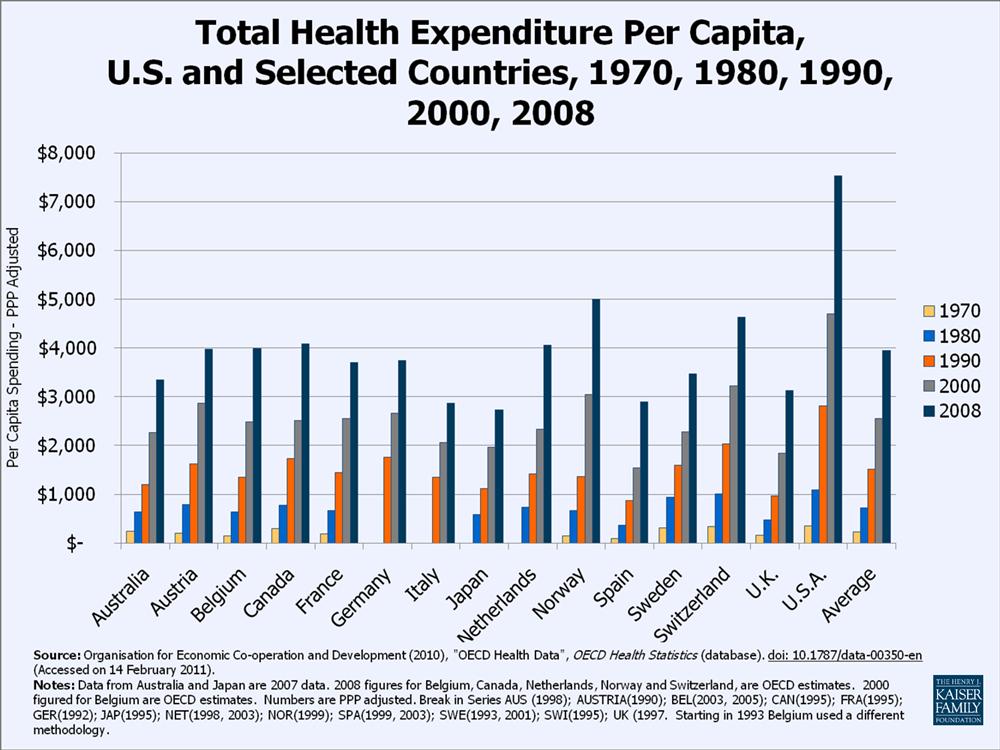
The debates about healthcare reform still seems to skirt around the real problem with our health care system.  I believe everyone should have access to affordable healthcare.  There in lies the problem which Obamacare doesn’t seem to be addressing – the affordability issue.  Why is healthcare in the United States so expensive?  Our country spends exceedingly higher rates per capita on healthcare than any other nation, yet the overall health of our country does not reflect this.  Circulatory diseases, respiratory diseases, mental health issues, diabetes and musculoskeletal system diseases are all treated/maintained and cured at higher rates elsewhere in the world.  It’s like we are paying for the lease on a new Cadillac yet driving a Ford Focus.  It will get you around town, maybe, though it’s no Cadillac.
In my common sense ideas of healthcare reform, the target would be to eliminate the power given to insurance providers and pharmaceuticals.  Stop allowing the healthcare system to be a business of making money and return the CARE back to healthcare by allowing it to be a service.

Medicine, in it’s intended purpose, is necessary.  In the cloud of drugs becoming a get rich quick scheme for companies to legally market and distribute with horrendous side effects and prices to match – is out of control.

In my common sense mind the profitability of drug companies needs to be eliminated.  There should be caps on the amount medication costs, rather than the expense being a reflection of its novelty, recency to the market, or availability of generic brands.

Penalties would be great for drug companies who “accidentally” released a medicine which was later found out to be too dangerous or risky.  It seems all too often, pharmaceutical companies are in a rush to release a product and build their bank instead of ensuring safety.

Those who are driven in this field to line their pockets would likely move on.  Those left working in this industry would be in it because they cared about making people well and curing illness.

And the other evil of the industry being ignored by healthcare reform is insurance providers.  It’s hard to pinpoint which industry is most responsible for the increase in expenses since they seem to feed off of each other in a competitive manner and both are equally out of control.

Insurance companies have all the power of who, where, how much and if they will cover your health.  Those who can afford insurance pay too much in premiums to not get a say in how they want to receive it.

Insurance companies hinder how providers would provide services because everything revolves around the cost.  Preventative measures are avoided due to billing and often lead to even greater, more expensive problems later.

To me, there is no sense in allowing the health insurance industry to continue having so much power and control.  Insurance should be a service, not a money-making business.  This would ensure healthcare to be affordable for all.

Healthcare reform seems to be opening up 34 million Americans to a corrupt and flawed system.  Insurance and pharmaceutical companies will continue to take advantage of opportunities to profit and 34 million more of us will be subject to the stresses of what it takes to “get well” in American healthcare.

–   –   –   –   –   –   –   –   –   –   –   –   –

As for Gayle, my mom called me within days after our phone conversation.  She reported Gayle didn’t make it to KC Free and instead had to go to the emergency room over the weekend.  They found her hip was fractured and she was diagnosed with breast cancer.  With such a fear over the medical expenses and being uninsured she hadn’t been to a doctor in years.  Gayle never left the hospital, she was placed on hospice and passed the night of Forth of July.

Her four-year old grandson, who she was helping to raise, struggled to understand where his GiGi went.  When his family tried to console him and tell him she wouldn’t be coming back he verbalized anger towards doctors and hospitals as if they were the ones responsible for her death.  For him and his family, their lives are forever changed because of a disease untreated.  A wife, a mother of 3, a grandmother and a friend is gone because of the lack of affordable healthcare.

For Gayle, healthcare reform in the United States was too little too late.  What I hope Americans realize and demand politicians to address is access to doctors and hospitals is a symptom of the greater problem.

Grassroots for Women & Children

If you examined the laws in India you might consider the country to be progressive in human rights, finally putting person equality before cultural traditions and religious justification.  As a society with its own history of discrimination, we can understand how the attitudes don’t immediately change once a law is put in place and it often takes decades for perception to shift and acceptance to find its place, even then there are some exceptions.

So why is it that despite laws being in place to protect the rights of women and children in India, there is still such blatant disregard for their welfare?  The Child Marriage Restrain Act was established in 1929, yet there are still too many cases of children under 18 being arranged to marry.  This is only one of many issues – human trafficking, child labor, infanticide, and the exchange of a dowry.

A dowry is one representation of why women are not valued in Indian culture, it is a gift or form of payment a women’s family must pay to the family of her future husband.  Although dowry became prohibited by law in 1961, it is still common practice in India.  A daughter being born does not benefit her parents at all, she is seen as needing to pay off a debt from a previous life.  The daughter will be taken care of then a dowry raised to marry her into another family where she will help to take care of her husband’s parents – not her own.  Since a son is valuable in terms of meaning and future roles he will play for the family, a boy is what Indian parents want.  Because of this view gender selection has begun to curve the ratio of male to female in India.  Infanticide happens with poor or rural families who cannot afford to care for a girl, and aborting a female fetus occurs with couples who can afford the prenatal care and want to avoid the stigma of a girl.

The dowry perpetuates the idea of women being less than men and leads to so many other problems.  Despite the laws being established to protect rights, the laws don’t appear to be enforced for the welfare of the women and children.  Beyond corruption in the systems and the desire to hang on to how things have always been, slow progress is occurring because of the lack of knowledge women have.  Most Indian women believe they are nothing without a man, either their dad, brother or husband.  They don’t know what their rights are or where to get help.  They are born into a world where they are looked down upon simply for being a girl and limit themselves accordingly.

One of the field trips our group went on in Kolkata was to an organization creating changes with their grassroots effort.  Child in Need Institute (CINI) focuses on empowering women with the idea if you can help the mother you can help the child.  They have centers throughout Kolkata serving different purposes.  CINI focuses on the health of the mom’s and their infants, educating them about nutrition and conducting support groups.  Health workers act as a first means of contact going door to door in villages and slums to provide basic health needs and resources, then can help support mothers and children in getting in to the CINI offices if further medical assistance is required by nurses or doctors.

We toured one location during a time when there was a free health clinic.  Hundreds of bright-colored sari adorned the women gathering with their wide-eyed infants.  They weighed babies, obtained supplements, and met with nurses or doctors for medication.  Another CINI location we visited was in the middle of the city, it was designated for street children.  Kids could go there for safe overnight shelters or attend evening school.  Even though the Child Labour Act has been prohibiting this practice since 1986, many children work as child laborers and miss out on gaining an education.  CINI provides education to help reintegrate children back to regular schools within 6 months to one year.  Making this program even more impressive is considering the behavioral problems some children have from both trauma and the need to be independent to survive on the street.

Because of the efforts Child in Need Institute, and other programs like it, has made towards bettering the lives of women and children there is hope for changing the culture in India.  With women coming together to gain confidence in how to do things and knowledge of how the laws protect them, attitudes will turn.  And with the next generation of youth pushing to gain an education, they will be different.

Much of the beauty and intrigue of India lies in its cultural and religious practices.  Their dances, food, and tradition are uniquely Indian and should be valued and preserved as such.  I wonder, is it possible for India to maintain their rich traditions and religious practices while omitting the inequality?  Maybe as the women take power…

If you are interested in learning more check out the Child in Need Institute’s website.  They accept donations to continue their work and proudly contribute 90% of donations directly to the women and children – greater than average for an NGO.  http://www.cini-india.org/

This post is part of a series written about my travels to India as part of a social welfare class.  Feel free to look back through previous posts about my experiences or return to see what’s been added.

Reflections Fit For Father’s Day

That’s me and my dad (1982). You will see not much changes, he still wears the same mustache.

I have an older brother and a younger sister, none of us look a thing like my dad.  We are all three reflections of my mom and her side of our family.  My mother is beautiful and looks the same now as she did in pictures from twenty years ago, except better because she is without a helmet perm and enormous eye glasses.  She is incredibly kind spirited and generous to all living things.  She is bursting with creativity and is more motivated to follow-through on tasks quickly than anyone I have ever met – which easily demonstrates why she has been so successful in her own interior design business.  My siblings and I have observed these characteristics in her and have absorbed parts to benefit us each in unique ways.

For better or for worse, feel like I am the only one in my family who has acquired some personality traits from my dad.  So, in honor of my dad on Father’s Day – here goes…

*HUMOR*

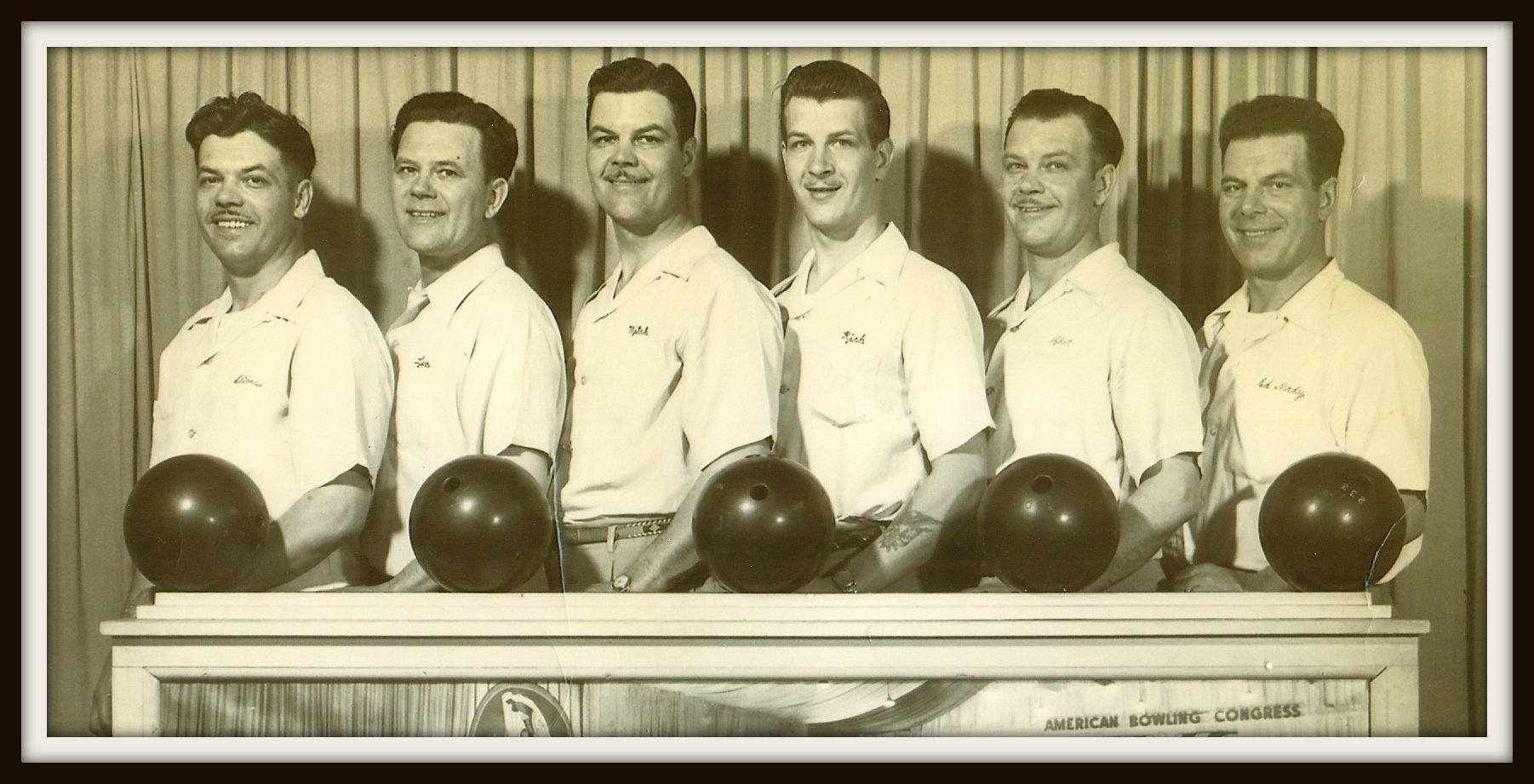
I’ve always heard stories about my dad’s dad and his family of brothers, my grandpa passed away before I was born although I feel I know him from these memories shared.  My grandma told me while she was dating him she would eat at his family’s house for dinner and her stomach would ache the next day from laughter.  She talked about how each brother would seem funnier then the next and how his mom would top them all with her punch lines.  I can almost imagine the scene, the sarcasm and the ridiculousness.

The Mady Brothers. My grandpa is the handsome one, third from the left.

At our family dinner table I know when my dad is about to tell a joke before he even opens his mouth.  So I find it exceptionally entertaining when I can make him laugh or encourage him to be gullible in an outlandish tale.  Part of what makes my humor is how people don’t suspect it from the sweet look I got from my mom.  I can make a silly request or develop a whole unbelievably, outrageous story leaving the other person looking dumbfounded before they question my innocence.

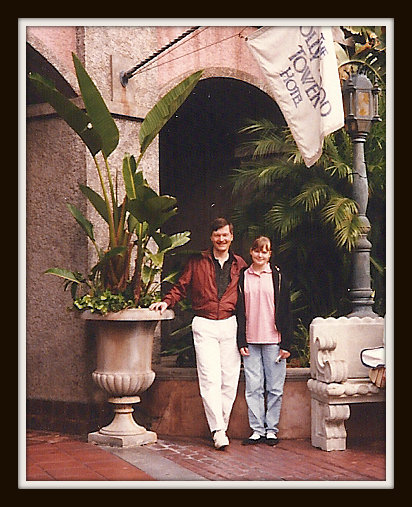
About to ride The Tower of Terror 1995. Looking so cool – Dad in his member’s only jacket and me in tapered jeans.

*ADVENTURE*

My mom, brother and sister are perfectly content  staying with their feet firmly planted on the ground, and without risk or fear.  My dad and I are not.  My dad and I rode roller coasters on family vacations while the rest faked illness for a seat on the park bench.  We took scuba diving lessons while the others were beach bound.  He escorted me and my friend’s to haunted houses before we were old enough to drive ourselves. And while my family came to support and watch me skydive, I think my dad was slightly jealous to not be strapped to a parachute too.

Without my dad being at my side through the early adventures, I may not have gone on to pursue my own later – canyoning, paragliding, river rafting etc.  Don’t get me wrong, some of these risks have been terrifying to me.  It’s overcoming the fear for the adventure which makes it exhilarating and worth it every time.

*QUESTIONING*

My dad always wanted us to think for ourselves.  Sounds like a great thing for a parent to want to teach their children, except if you are the child and you just want to know how long before we stop.  And what you get in response is “Well, we are driving at a rate of 68 miles per hour and have another 150 miles to go.”

As a double major in biology and chemistry it was important for him that we didn’t just get answers, rather  we would know how to solve the problems.   This would lead to thinking outside the box and questioning what was already known.  Around middle school or high school age I began to understand from my dad there is a lot more happening in the world then I would get from public education.  I gained confidence to speak my mind, ask direct questions and point out what didn’t make sense to me in school, at the workplace and in general.  It’s not always cool to be the one who is trying question the flow of the popular opinion.  Being cool isn’t important to me though, I would rather not conform back into a box.

I am an extremely lucky individual to have the parents I have, who have supported me so much in life, and who have blessed me with the inherited and learned characteristics which make me who I am.  I love them both, and today – Happy Father’s Day Dad – I appreciate you in so many ways.

When It Rains – It Floods

The following is an account of an event from exactly five years ago today during my journey to India.  Since the anniversary of the start of the trip I have been posting stories from this adventure, this is the sixth.  I understood Kolkata would be unique from anything I had ever experienced, different language, culture, traditions, food, clothing etc.  There were also other surprises I never anticipated and Wednesday, June 13th, 2007 presented one of those shocks.

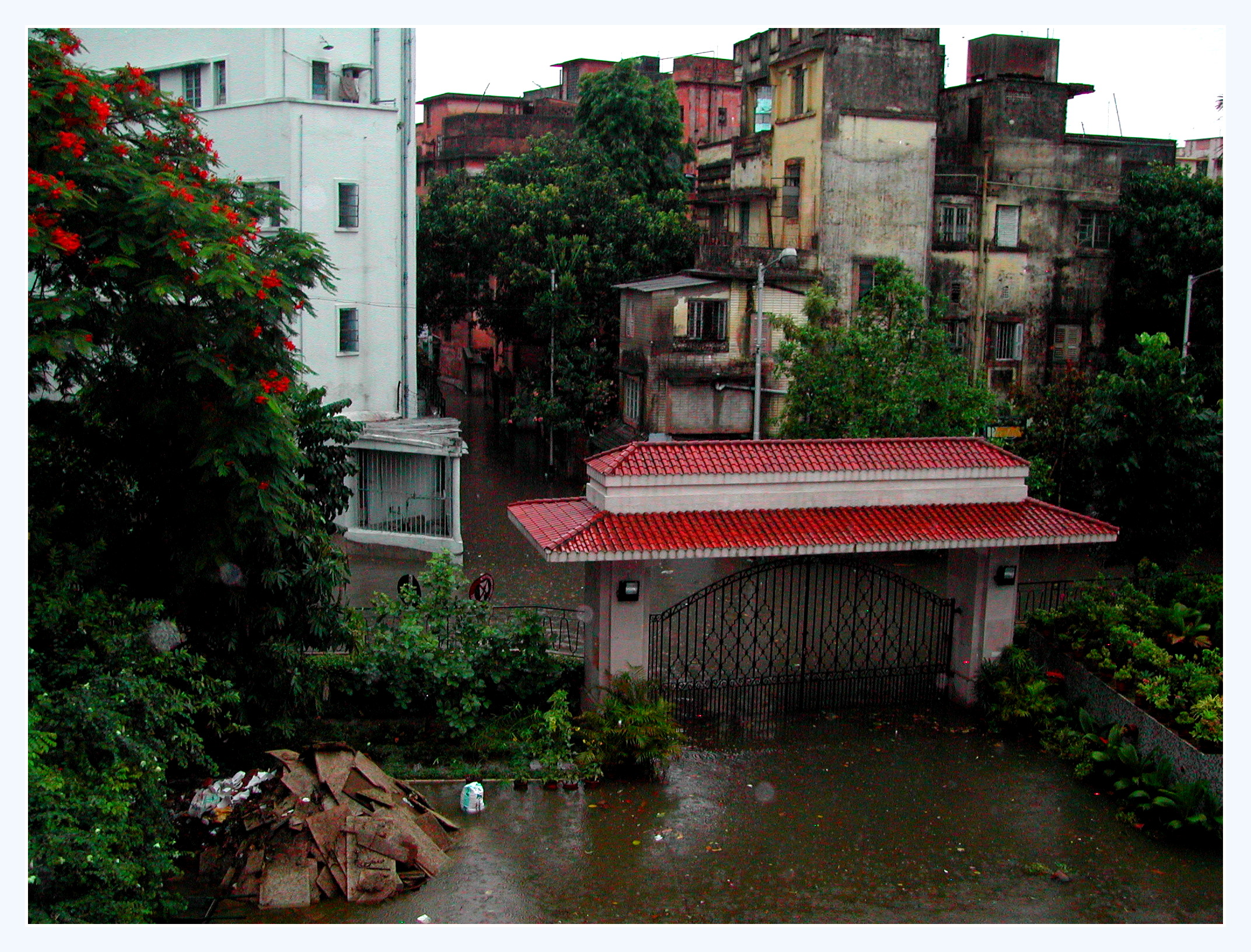
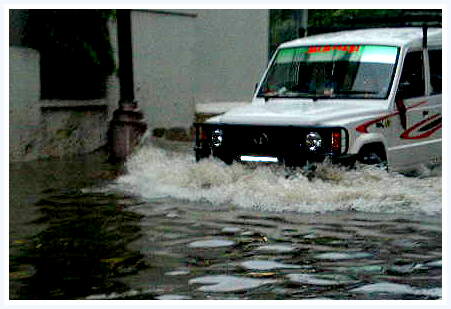
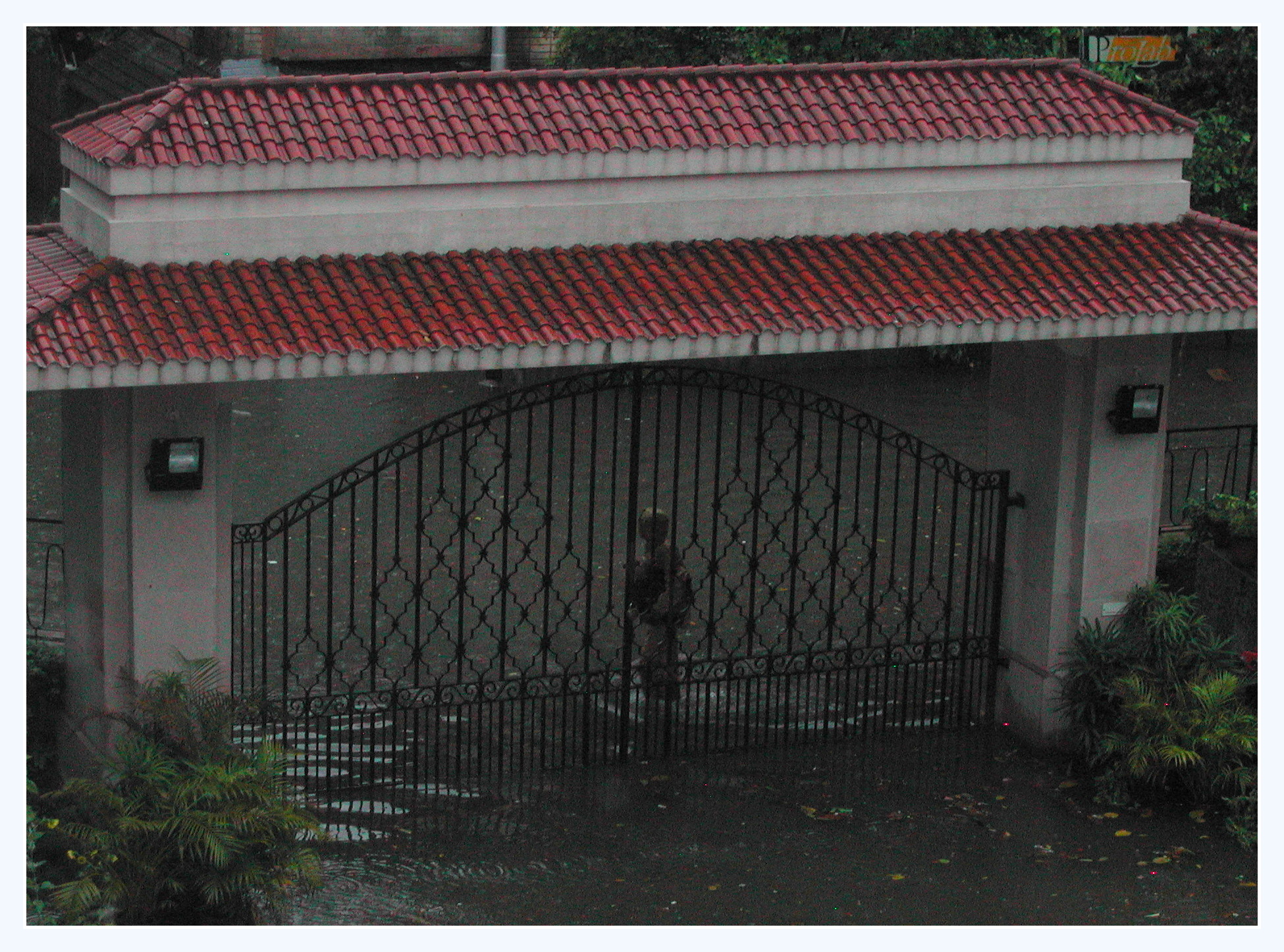
I awoke to heavy rain and crashing thunder that morning, it was close to monsoon season although we thought we would be returning home before it started.  My usual routine would be to head down to breakfast with which ever travel buddies happened to be hungry and was startled to peer over the balcony.  What was, the day prior, our floral sanctuary of a courtyard was now a swamp of dark dirty water.  Going down the stairs to the ground level I wondered if my eggs and warm cereal were even worth the effort on this day.  I waded through shin deep water to step up to the cafeteria area and reach my friends.


As an assignment for the program I was reading May You Be The Mother of a Hundred Sons by Elisabeth Bumiller.  In it she describes the flooding on the streets during the monsoons.  Naively I assumed since the book was published in 1991, drainage systems would have corrected the problem.  Wow, was I wrong.

Days before this Jesi, Natalie and I set appointments for the morning to get massages as it was a day off of classes, and we were encouraged by our instructor to try out the Indian style of massage.  We wondered whether everything would be closed down anyway.  We were assured cabs continue to run and businesses stay open today.  Following breakfast we began the trek out to the main street, the usually noisy and bustling traffic had slowed to only the larger vehicles to manage the dingy water.  Shortly after leaving the gates of the Ramakrishna Mission I chickened out.  Considering how dark the water was and knowing the condition of the sidewalk to not being able to watch my step I knew I would be clumsy.  Further, having observed for weeks trash, human and animal waste all over the streets of Kolkata and then feeling things brush up against my legs in the water I couldn’t see…  the princess in me had to run back up to my room and immediately shower.  

By the evening the flooding had resided and while the streets were wet, water was not standing everywhere.  At yoga some of the local women informed us the flooding is normal.  They stated later in the monsoon season it will sometimes rain like it had that morning and continue for three days.  When it peaks all traffic stops and including trains and planes.

It was shocking to witness a whole city underwater and to think at a fairly regular rate in the summer time the whole population grinds to a stop to wait for the water to reside.  Maybe it’s the equivalent to when Kansas City has a blizzard or an ice storm and waits for the plows to clear or precipitation to melt.  The difference between Kolkata and Kansas City when it comes to natures interference is the number of individuals without appropriate shelter.  

I was privileged on June 13, 2007 to escape the waters to an air-conditioned third story room.  I wondered where everyone else went though?  Where do the families who live on the streets go when it floods?  What does the already impoverished conditions of the slums look like with tainted liquid?  How many people have to sit and wait it out with their feet soaked in the standing water I was scared of being in?

While I can’t repair the drainage for the Kolkata, at least I can be more patient when nature interferes with my plans at home.  Remembering most importantly: I am safe and it will pass.

On a somewhat humorous note, Natalie and Jesi did brave the conditions to attend their massage appointment the morning of the flooding.  Two days afterwards both girls had rashes covering their bodies, mostly their legs.  Natalie and Jesi continually checked  their skin for improvements and frequently found it to be spreading more.  They resorted to calling it their scabies and were thankful when it eventually went away later in the week.  Exactly what it was or what caused the rash is unknown.  We assumed it was probably a reaction to the tables or oil at the massage place.  Whatever it was, I was happy I chose not to go.


Lessons in Love, the Mother Teresa’s Homes – Kolkata

We toured several Mother Teresa’s Homes in Kolkata.  The five homes we toured reminded me of the Ramakrishna Mission, our temporary home in Kolkata, in the way that outside the walls of the center were bustling crowded chaos and inside was a friendly, peaceful sanctuary.

“I alone cannot change the world, but I can cast a stone across the waters to create many ripples.” – Mother Teresa

The first home was private although what we could tour was Mother Teresa’s tomb, a museum and artifact area and also a peak into her bedroom.  I thought it was a perfect way to start the day since it provided us with her background, turns out I never had much of an education on who she was before then.  Seems that most of my history lessons in school related to war and left little room for the world’s charitable heroes.  It was enlightening to learn about her purpose and drive to help everyone in need, especially in a culture where “untouchables” were ignored so easily.  What amazed me most in the museum was the poster of locations of Mother Teresa Homes around the world – including the United States and as close to my home as Denver, Colorado.  She unconditionally loved and taught others how love can help transform people’s lives even when they are poor, when they are hungry and when they are dying.

“Live simply so that others may simply live.” – Mother Teresa

Looking into her bedroom I reflected on how she lived so simply, a clear indicator of how she was unselfish and entirely devoted to serving others.  Mother wore the same blue and white sari each day and repaired her own sandals rather than purchasing new, she had artwork on her wall made by her own hand, small bed with a thin mattress, quaint wardrobe closet, desk and table.  The room was smaller than my first college dormitory and was located at the top of the stairs centrally located in the building.  Feeling a sense of her spirit in this way helped to prepare me for the rest of the tour.

“We cannot do great things on this Earth, only small things with great love.”  – Mother Teresa

The second home we saw was an orphanage and center for people to come and get medication they could not afford.  At first I noticed the music coming loudly from the upstairs of one of the buildings.  When we walked in there were bright colors and blown up beach balls hanging from the ceiling.  Past the entrance a large room held rows of cribs for infants.  Upstairs was the room the music was playing, boys around the age of two were running back and forth across the room in fun.  Most didn’t seem to notice or care about the visitors at the gate and a few curious little ones came to check us out.  In other buildings were children with mental and physical health needs.  It appeared some of the kids might have had developmental disabilities, cerebral palsy and hearing or sight issues.  These children ranged in very young to around twelve years old, the room had rows of both cribs and beds.  Some children had severe needs and were completely crippled and immobile, these were difficult to witness.  I found myself wondering how each of these children came to live at this Mother Teresa’s Home.  Had their parents tried to care for them and what circumstances led to their decision to leave them?

Upon leaving this home, we waited outside the gates for our transportation to arrive.  A pretty little girl in tattered clothes with a big smile came up and started begging my classmates and I for money.  Having discussed what we all felt comfortable doing in this situation, as it happened so frequently, we opted to give food.  I first observed Jesi giving her a granola bar; the girl took it and placed it behind her back to move on politely to my next classmate.  Julia offered her another food item and again the girl placed it behind her back to step over to my next classmate in line.  A man came by behind the girl and took the food from her hands, I assumed this was her father.  While we were getting into the cars it appeared this girl’s parents were irate with her, maybe for not getting enough from us or for it not being money.  They came to the vehicle window and spoke in an angry manner towards us and the girl.  This situation was upset me to think how parents would exploit their children in this manner. I felt like it was a fitting time to witness this behavior, and realize how many of the children living in these homes being loved may have otherwise ended up begging on the streets like this little girl.

“The most terrible poverty is loneliness, and the feeling of being unloved.”  – Mother Teresa

The third home we toured was for the dying and destitute adults.  It had volunteers from all over the world who would help with cleaning, cooking and feeding responsibilities.  Men were responsible for going out and picking people up off the streets and taking them to this home.  All of the patients, including women, had shaved heads, many appeared mentally ill and some were incredibly frail.  Two long rooms separated males and females, each room with a long path down the middle and cots lined up on either side.  It was uncomfortable walking around not assisting in any way, all I could do was offer a smile to the woman as we passed.  The way we toured felt like we were visiting a zoo and walking through an exhibit.  These conditions were not comfortable and not dignified by Western standards, however, the alternative of dying alone and unloved on the streets of Kolkata are worse.  The fourth home was no less depressing, it was specifically for mentally ill and handicap adults, although there was one young male patient appearing very young and out-of-place.  His collarbone projecting through his body and I couldn’t help wondering what kind of future lie ahead for a boy like him.

“Joy is strength.”  – Mother Teresa

The last Mother Teresa Home we visited was my favorite of the day since we were able to really interact with the children in the orphanage.  The nun who showed us around was an obvious favorite of all the children in the yard since they all called to her and ran towards her when she was in their sight.  She took us upstairs to where there were infants and toddlers.  In one crib there was a tiny baby whose legs were so skinny it looked like her diaper would easily fall off.  The toddlers were all friendly and jumped into my classmate’s arms.  One older girl tapped my legs and waved hello.  I knelt down to talk to her, she spoke a little English and was able to tell me she was 14 and couldn’t walk because of problems with her back.  She told me she enjoys painting and pointed out a friend in the room.  I asked her if she attends school at the Mother Teresa’s Home and she looked at me funny and replied no, as if I should have known she wouldn’t go to school.  That made me wonder a little more about the homes and what happens to the children, especially if disabled, as they grow up and “age out of the system” as we might put it in the United States.  At the end of the visit we passed out candy to children in the yard which Julia had brought from home for a special occasion such as this.  We played for a while, some were able to communicate their names and gestured requests for what they wanted us to do with them like spin or go down the slide.  It was a necessary to end that day on a positive note.

“If you judge people, you have no time to love them.” – Mother Teresa

The lessons I learned from one month in West Bengal I will continue processing for the rest of my life.  And the people, the children and the conditions I witnessed in the Mother Teresa Homes was a day I will never forget.  I felt a deep sense of compassion for everyone I saw.  My judgement about this day was related to the Western standards for quality of life and how these homes were lacking, of course this was dismissing the fact that these homes far exceed the quality of life these individuals would have on the streets of Kolkata.  And my sadness was about these individuals not having the same opportunities a lot of the world takes for granted.

“Yesterday is gone. Tomorrow has not yet come. We have only today. Let us begin.”  – Mother Teresa

—–

This post is the fourth part of my series about my summer traveling in India.  I went with a group of students to study the social welfare systems in Kolkata, this month marks the fifth anniversary of the trip.  I will continue posting about our adventures, programs we toured and paradoxes we struggled with this month in reflection of the trip that influenced me so greatly.

India – Maintaining Sanity

This is the third post regarding my travels to West Bengal five years ago.  I am pleased to be submerging myself in photographs, writings and videos I captured while I was there as well as revisiting and viewing new literature, movies and other media related to India.  Ultimately, the country is so big, the regions vary greatly and the population is huge… my perception cannot be taken for truth.  However, I do feel an obligation to share my experience as India has influenced my life so greatly.

My last posting about India related to the traffic and while I did my best to paint the picture of chaos it is something you cannot imagine until you are in the middle of it.  Beyond the traffic there is the confusion of poverty and wealth, beauty and disgust, enlightening ideas and pure nonsense everywhere I turned, then heat – heat – heat over it all.  I was over stimulated with new sights, sounds and smells, and disturbed by contrasting values and foreign systems.

My sanity – besides having seven new friends who related to my dismay – lay in the accommodations we stayed in throughout our trip.  The Ramakrishna Mission near Gol Park was my oasis.  It was my safety and quiet from the perplexity which existed outside those walls.  The entrance on a side street took you into a courtyard where the walls became a barrier to the honking craziness.  The energy of anxiety melted into a calm entering through the gate.  The courtyard was filled with flowers and the occasional kitten with her momma.  The evening chants and bells were a peaceful reminder to slow down and take the whole experience in.  The pots planted on our first day contained sunflowers, the Kansas state flower, feeling like an welcoming home.

Our rooms were modest, two roommates sharing twin beds.  Our bathrooms had real toilets and while our showers didn’t get hot water, wouldn’t have wanted a hot shower in the heat anyways.  There were days I showered 3 times do to perspiration.  Making friends with some Australian girls we learned not all of the rooms at the RKM had air-conditioning, I was beyond thankful we did.

We ate most of our meals in the dining room at the RKM, it was all traditional Indian food with some options at every meal.  For breakfast, as one of my travel mates recently reminded me, we ate cereal flakes with warm milk and eggs cooked to order.  Our stomachs quickly grew sick of the foreign meals so we attempted to consume as much yogurt as possible to try to calm this.  The yogurt was served plain with the clear liquid, most of us added four and five spoonfuls of sugar in to make it edible to our pallets.  At dinner our plates would arrive with three or four separate piles of food items with rice and naan on the side.   The entire month I had no idea what I was consuming other than knowing it was the vegan option.  Vegetables never looked familiar and even when my instructor put names to what I was eating, I never seemed to retain the words.

The very best food from the RKM kitchen was when they offered mangoes.  The mangoes were the freshest, sweetest and most juicy mangoes I had ever tasted, even to this day.  Now I am not sure if they were that good because they are the best mangoes in the world, or if it was simply because I was so in desperate need of something sweet, slightly familiar and not tainted with Indian spices.

At risk of being called a sheltered Midwestern/American girl… I needed quiet, inviting flowers and air-conditioned evenings with occasional mango slices in my yogurt to maintain my sanity during my month in India and the Ramakrishna Mission was just that kind of place.


In Honor of Memorial Day.

Enlisting in our nations military are some of the bravest and strongest individuals among us.  These men and women commit to the purpose to serve and protect our country, making personal sacrifices most of us cannot relate to or even begin to imagine.  1.6 million civilians have become veterans in nearly a decade since the war in Iraq began.  While this number is astounding, many U.S. citizens don’t know a soldier, don’t think about the war and don’t recognize how irresponsible it is for us not to support our troops and their families.

In honor of Memorial Day please consider the over 6,000 soldiers who have been killed in combat.  They leave behind parents, spouses, children and friends whose grief of a senseless loss will have infinite effects throughout their lives.  In addition to combat deaths, statistics regarding suicide rates of soldiers should be enough to alert the military and the government to discontinue their efforts and re-evaluate how to gain peace.  Many soldiers returning from Iraq and Afghanistan have to cope with the effects of post traumatic stress related to the devastation they have witnessed overseas.  Troops experience real life nightmares and exist in a perpetual state of alert anxiety to survive.  Many soldiers returning have to rediscover their place within their family and in society, some uprooted again for redeployment.  Many soldiers struggle to find employment in our suffering economy, some statistics suggest unemployment for veterans is higher than 27%.  Many soldiers, 45% of veterans, need some form of services related compensation do to injury or trauma.  And many soldiers need more mental health services then the military is prepared to support, some give up seeking help because of the amount of paperwork required by the VA.  In the last two years suicide rates of soldiers has surpassed the combat death rate.

In honor of Memorial Day please consider the over $4 trillion which has been spent related to Iraq, Afghanistan and Pakistan.  It’s difficult to say what we have or have not accomplished with these funds because of the war efforts without being hyper critical of our government or cynical about their reports of accomplishments.  What’s not difficult to see is the injustice that has been served to our troops and their families because of the sacrifices they have given in honor of our country.  The physical and emotional pain these men and women will continue to deal with for the rest of their lives and the lack of support to them once their service is over is outrageous.  Even if you are an individual who doesn’t know a soldier and doesn’t think about the war on a regular basis, you are effected.  Every American feels the rippling effects of the senseless violence these brave men and women have witnessed.  We all feel the rippling effects from their families who stress at the absence of their loved ones.  We all feel the rippling effects from the hatred that perpetuates war.

In honor of Memorial Day please consider what you can do to help a soldier or help a soldier’s family.  And to honor those who have been lost in combat or from suicide – stand to put an end to the war and bring our brave men and women home.

Step one: Assimilation to traffic.

Our flight arrived in Kolkata just after 5AM.

Prior to departing the United States we had learned about the extreme weather conditions we would be dealing with traveling to India in May.  Tripadvisor.com had this to say: “April to June, Kolkata is at its hottest. Its humid, the sun is blazing, and it’s almost impossible to sightsee during the daytime. After June the rains set in, and more often than not the heavy monsoon rain floods the streets and throws traffic out of gear. However, if you can brave the rains and the humidity, Kolkata during the monsoons is a unique experience. But be prepared to wade your way through water back to your hotel.”  Careful consideration went into packing to determine what clothes would feel light for the weather, yet cover enough skin to be mindful to respect Indian culture.  (Following our study abroad program the school recognized the timing and flipped the program to traveling in December instead.)

I also personally prepared for the overcrowded city I would encounter once I learned Kolkata’s population reaches just over five million people.  I have had several occurrences of mild panic attacks in areas that have been dense with people.  It is especially bothersome when people are moving in various directions as opposed to one or two directions like a New York City sidewalk.  In the past my method of dealing with this anxiety has been to either freeze or flee.  I froze in the middle of LAX customs baggage claim in a rush to get to a connecting flight.  I stood still holding my breath waiting for the crowd to clear before gathering my belonging to move along.  My backpacking buddies hung onto my clothes as I fled through the pack of Tour De France observers after watching Lance Armstrong finish his seventh win on the Champs-Elysees.   I think they appreciated my panic in the moment to be some of the first to get back to the subway after the race.  Needless to say, I knew fleeing nor freezing would be helpful on this trip and I mentally prepared myself to cope with the densely populated city.

The thing I hadn’t given much thought to and quickly realized my American ideals needed to adjust, was the traffic.  Since we arrived so early in the morning neither the heat nor crowds were out in full effect yet, however, straight from the airport I began learning how different the streets would be in India.  Here is my list of the top six items required for assimilating to Kolkata traffic.   

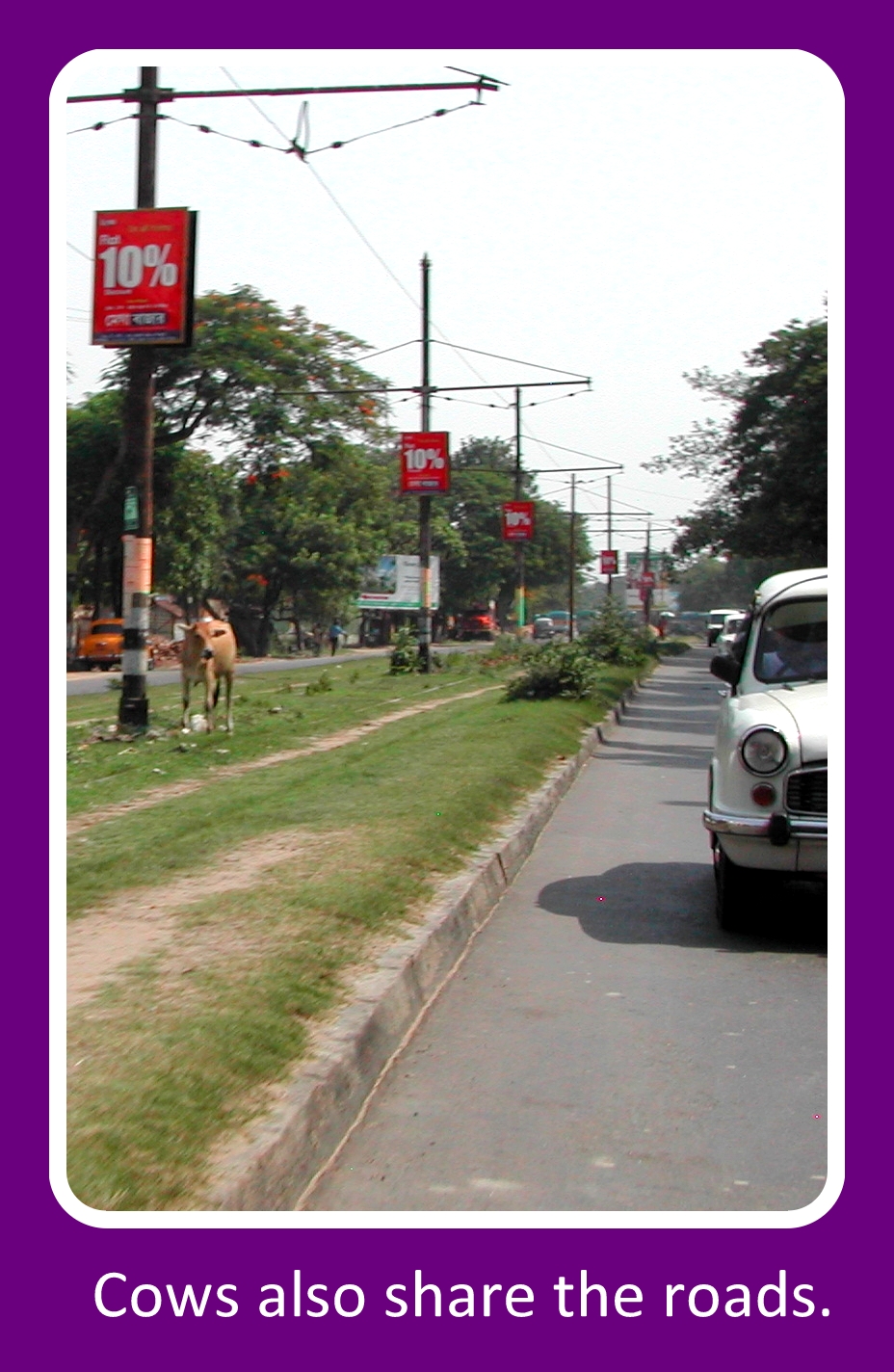
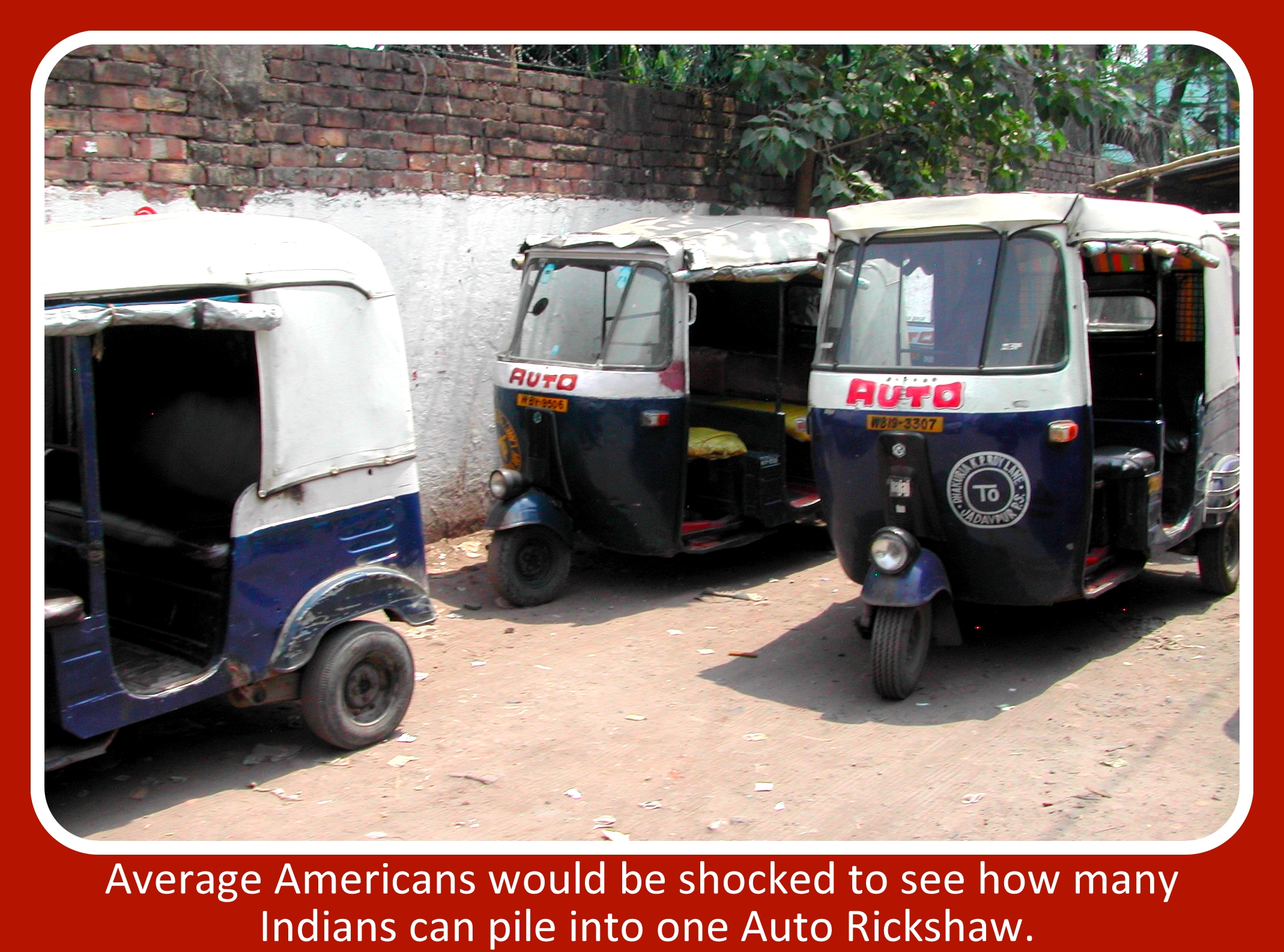
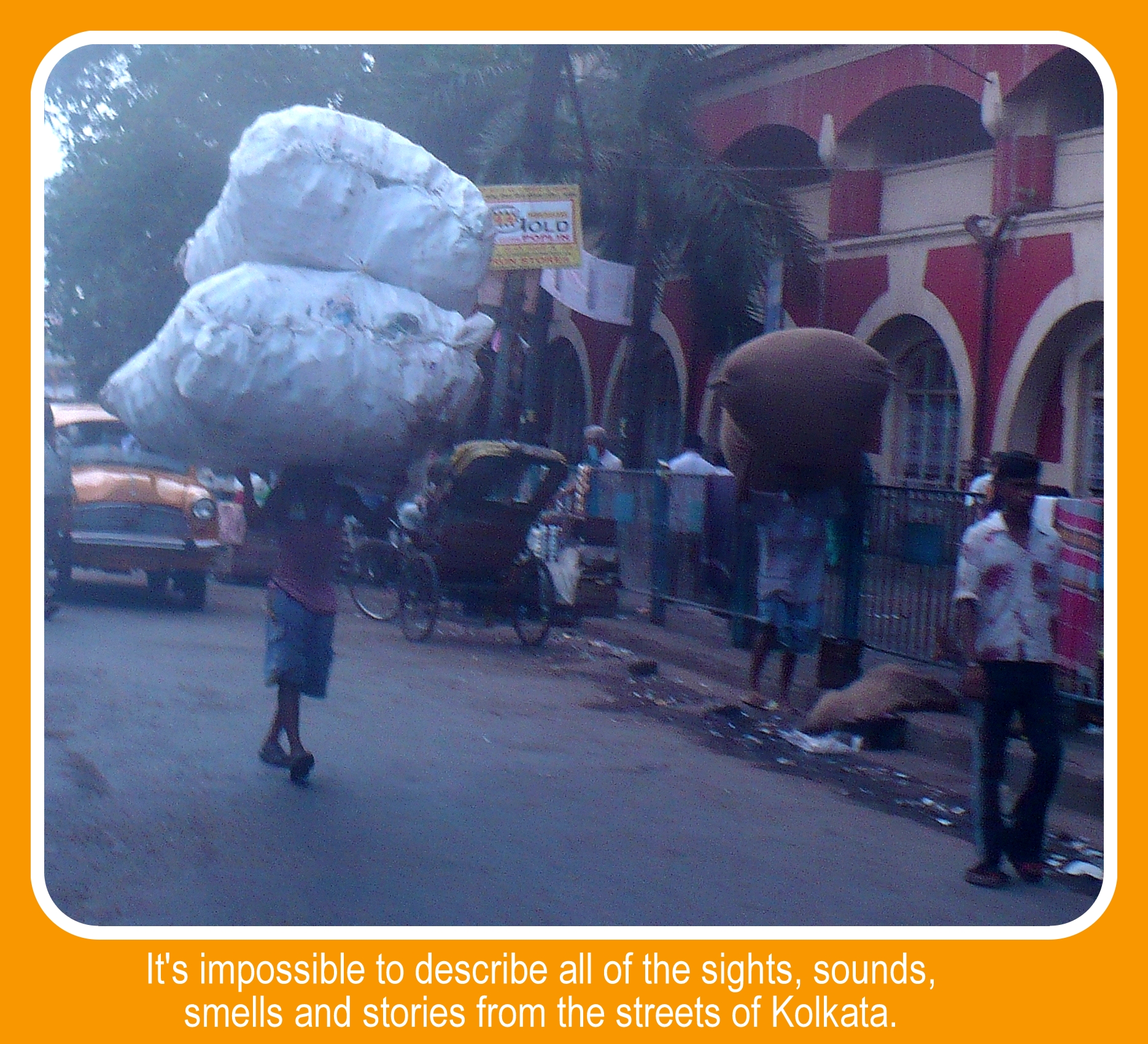
1.)  Any and all modes of transportation are acceptable on the road.  Cars, cabs, trucks, buses, rickshaws, motorcycles, scooters, bicycles and people all share the streets.  Some vehicles are very nice, while most appear to be on the verge of breaking down.  The rickshaws can be motorized with a driver in the front and row of seats in the back, they also can be the seats pulled by a man on foot or on a bike.  As if the types of vehicles to look out for on the roads weren’t enough there is also the occasional cow meandering through the streets.  The cows are sacred, they do not belong to anyone and are not to be disturbed.  Crossing the street was like watching a reality game of Pacman.  People would jump out in front of an aged bus and yellow cab, then have to weave through a scooter and a bike in the next step.  The chaos took some getting used to.

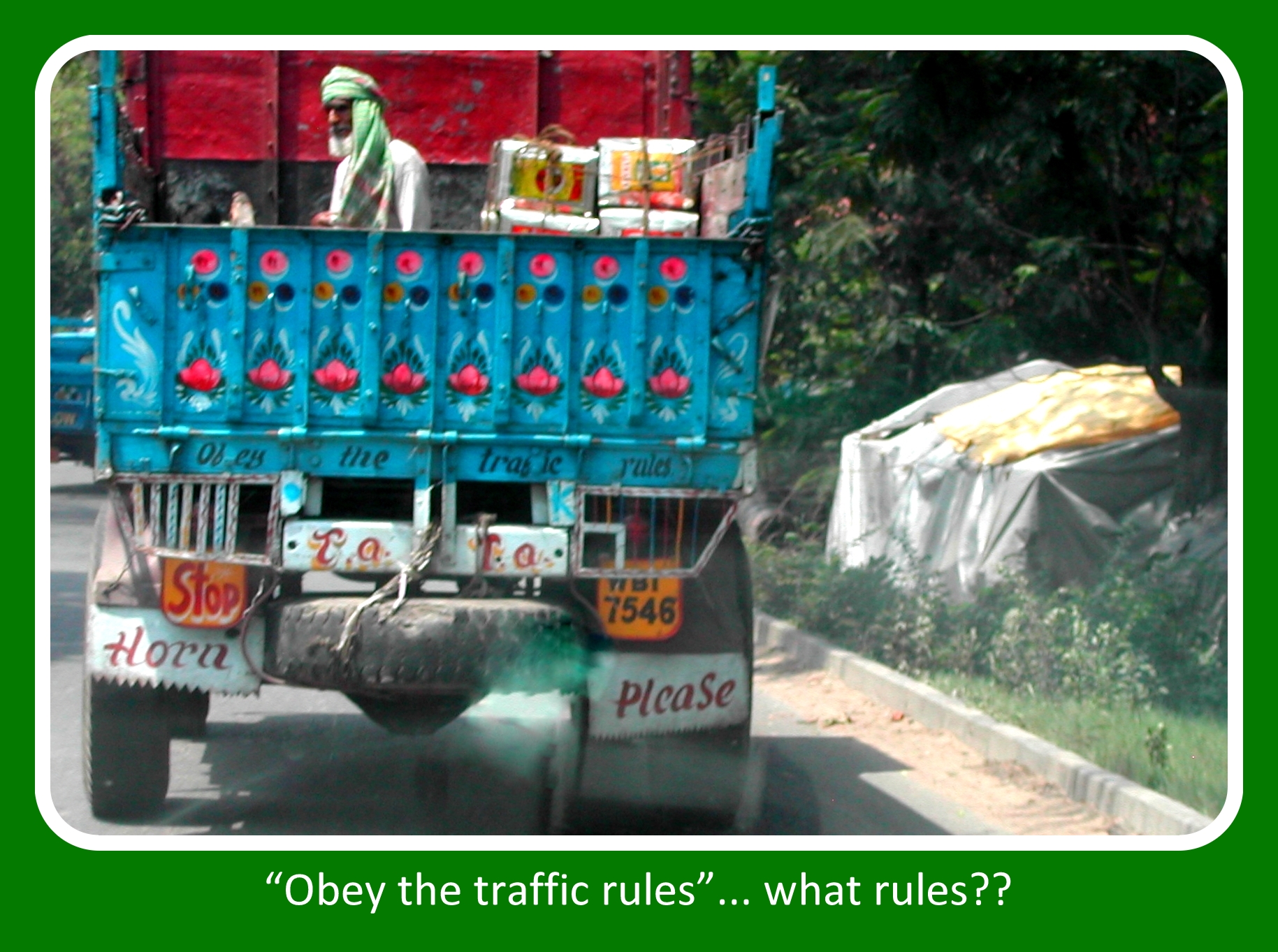
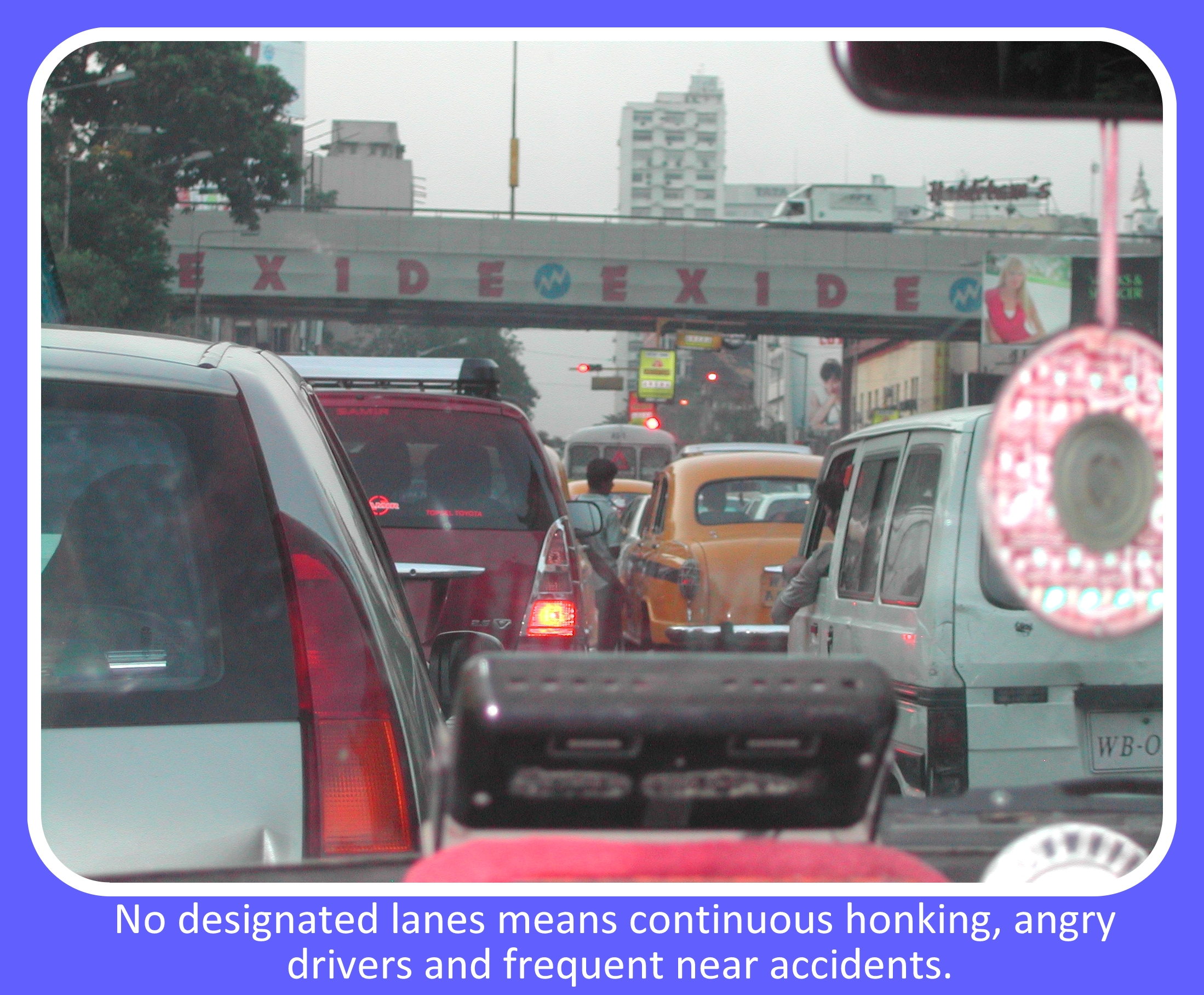
2.) There are no apparent traffic guidelines.  While lanes are drawn in some places they are typically not used, especially when it came to high traffic areas.  Imagine your five o’clock rush hour commute with three lanes of traffic and cars inching their way bumper to bumper.  In Kolkata drivers would pile in six vehicles across in a quilted pattern, cutting each other off in an emergent push to get to the front.  Scooters, bikes and rickshaws squeezing through the gaps of the larger vehicles to create an illogical network of haphazardly moving parts.  Only this wasn’t rush hour – this was everyday, all day.

3.) American ideals of standards for vehicle safety needed to be dismissed.  The taxi cab speedometer appeared to be out of service for the last decade as they jumped around relating to the bumps in the road rather than an accurate reading of speed.  In America we caravan groups of people traveling from one location to the next, in India everyone piles in together.  It wouldn’t be rare to see a group of eight riding in one cab, all on top of one another in the front and back seat.  I’d even seen whole families riding on a scooter together, mom carrying baby on the back and dad with tot on his lap.  No car seats, no helmets, and no seat belts.

4.) The honking.  Every driver honks about everything, it seemed like  honking was the secondary language next to Bengali in Kolkata.  I found myself video taping rides through the streets because I never felt I could describe the chaos and the noise to my friends and family when I got home.  I wanted to make them suffer through the recordings so that they could minutely relate to the annoyance I had suffered during the trip.  Saving my sanity was the fact that the mission where we stayed drown out most of the sounds from the streets and the evening meditation chants gave me an alternate focus for my battered ears.

5.)  The need to be aware of the mad cab drivers.  Our group of students frequently chartered vehicles for planned excursions and day trips.  These were set up by our instructor who grew up in Kolkata and was able to make arrangements speaking Bengali.  There were also opportunities when we had to utilize cabs to ride from the airport, train stations or to more spur of the moment outings.  Our instructor was able to communicate locations to cab drivers even when we all didn’t ride together, other times it was up to us to find ways to get to where we wanted to go without any language assistance.  Some drivers couldn’t understand our requests and were illiterate as well, resourcefully driving us around until he was able to coax a pedestrian who could read to help tell the driver where we wanted to go.  Very few drivers could speak English, and one who did I will never forget.  I got into his taxi with three of my peers from a train station returning to the mission late into the evening.  We probably should have jumped out of his car after he struck another car with his hand yelling at the other driver in a jam leaving the parking area.  Based on his questions, it felt as though the hate he had towards Americans he would be taking out on us.  The car we were supposed to be following with our teacher and peers was no where in sight, in fact the usually crowded streets were empty and it was frighteningly quiet with this mad driver.  

6.) No women allowed.  Women do not drive and they do not help.  In India a car is really a luxury and most people who can afford luxuries can also afford drivers.  There are always exceptions, this is not a rule, it just is very unique to eight female students who together drive eight cars.  I noted how women do not help because there was one small bus we rode in as we visited sites in a rural area of West Bengal.  The bus was in rough shape and needed to be pushed in order to get it running.  By the end of the day our driver left the headlight out in the dark just to prevent it from completely breaking down.  Although us tough girls offered to help with pushing we were always denied, even if it took several minutes to recruit enough men to get the job done.

Can inspiration be drawn from state government?

I am no expert on state government, I don’t get involved in local politics and I am not into advocating for different ordinances.  I have consistently paid my state taxes on time and I have been a state employee.  Based on these items, I felt compelled to write about my thoughts when a letter from the State Department of Revenue arrived in the mail.

First, my history working with the state was not a fulfilling, healthy employment experience.  Once I realized my position in middle management I understood my battle to supervise staff could never be won with the hypocrisy of administrators managing things above me.  At times I described my situation as trying to reverse a freight train of unproductive behaviors, beliefs and systems that would/will perpetuate the wasteful spending and abuse of the system.  Ultimately this effects every single state taxpayer by draining their pockets to continue this cycle whether they realize it or not.  Just think every state taxpayer has something they wish would be improved in the state – education, healthcare, roads, support for the military – and we continue to hear about limited budgets and financial crisis.  My experience working for the state felt immoral, illogical and toxic at times since I maintained my common sense and strong ethics.  I was able to appreciate the job for educating me on how my tax dollars are blown, for the knowledge of how the state tolerates negligent employees and an understanding of how individuals work their way into positions of power not by evoking change for the positive, rather schmoozing up the ladder by helping others to cover-up situations and make themselves look better.

Needless to say, when a letter from the State Department of Revenue arrived and declared the state does not have a record of us paying state taxes in 2009…  Anger erupted from the dark black box inside of me where I have been burying hatred from this job and the recognition of what is wrong with the state government.  And at the same time I realize, it makes sense they would loose the paper work for our taxes.  It makes sense they wouldn’t look this over back in 2010, maybe, and try to correct mistakes then.  It makes sense they are out of money and have to go back years to collect on it now.  It makes sense that governments can be corrupt, spend wastefully and demand that we have to go out of our way to provide them evidence when they loose it.  Who is there to make the government accountable for change?

I wish I knew the answer for effecting change in such a damaged system.  Going back to the title of this post, I hope there will be inspiration to change the status quo of our government systems.  I hope at some point sooner then later, the populations living within these government systems realize how to unite to hold the governments accountable for the disasters they have created for us big and small.

Until then this disgruntled, former state employee had better go resubmit my 2009 state taxes to settle my small disaster.

A not so great reminder of why living in the mid-west is GREAT.

Sometimes it’s hard to see the “silver lining” when the clouds continually present themselves.  I decided to create my own meaning for a few could-have-been-disasterous events which have happened recently.  And I relate this meaning to reminding myself why I love living in the mid-west.

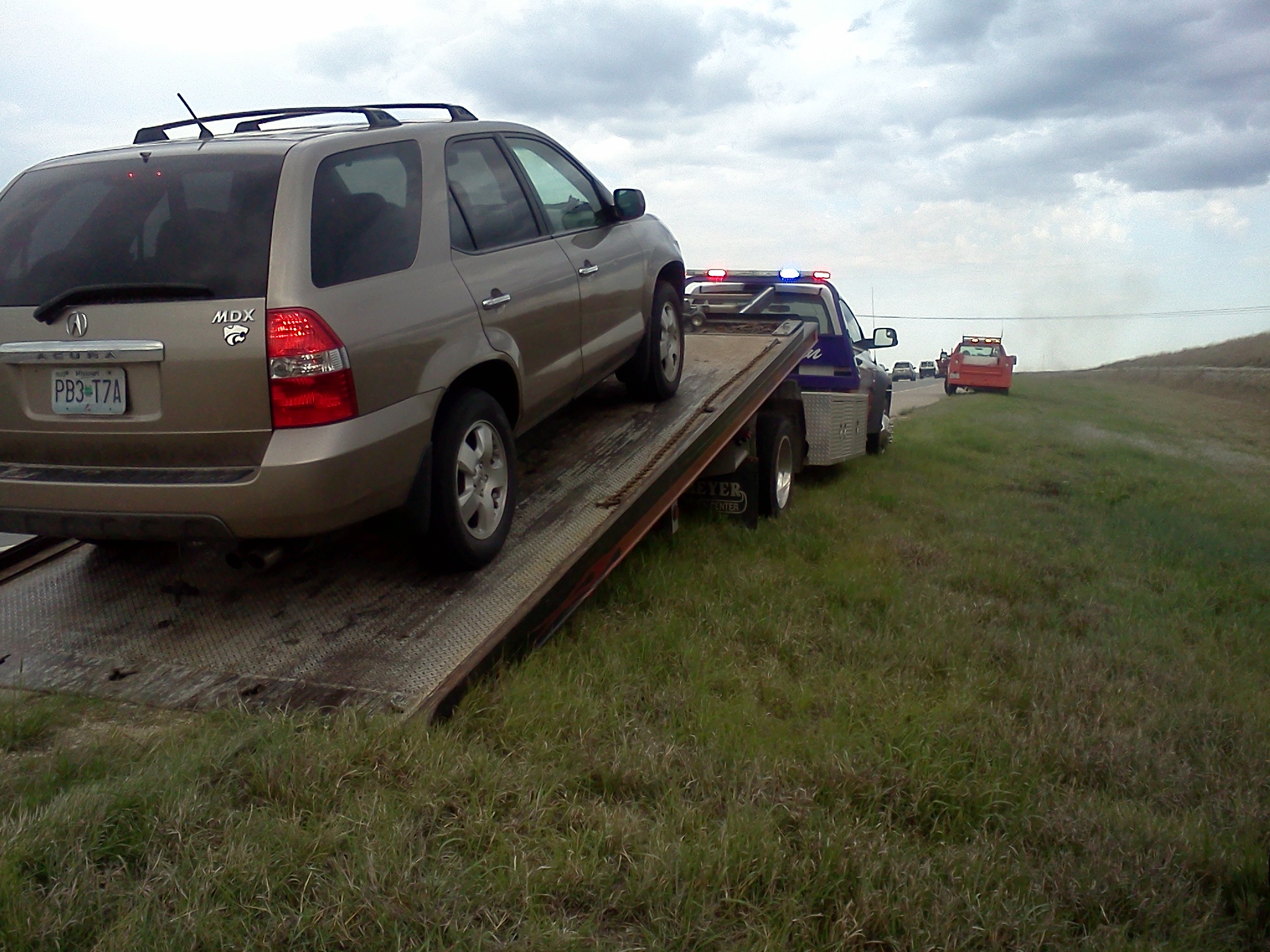
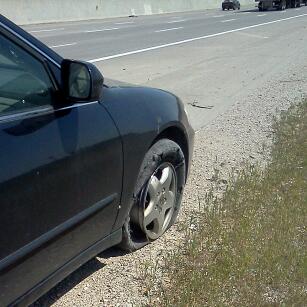
Earlier this month my family and I were riding back to Kansas City through the scenic Flint Hills.  We decided to get an early start on the travel home so that we would have some relaxation time when we got there, turns out we needed that relaxation time for a major hiccup in our plans.  Less than thirty minutes into our journey my husband had to pull to the side of the road as the driver’s side front tire deflated.

Together we maneuvered our 2 dogs, yes our whole family was in the vehicle, from the back to the front in order to get to the spare.  Unfortunately, we lacked the key needed to remove the flat tire from the car.  Standing dumbfounded on the side of the interstate with the Acura manual open, a truck pulled up behind us.  A gentleman from a small town, also headed east for a meeting the next day, offered to help us.  He was off duty and employed by the department of transportation.  After figuring out there was nothing we could do to change to the spare without the key the gentleman took my husband into the nearest town to find a way to rectify our situation.

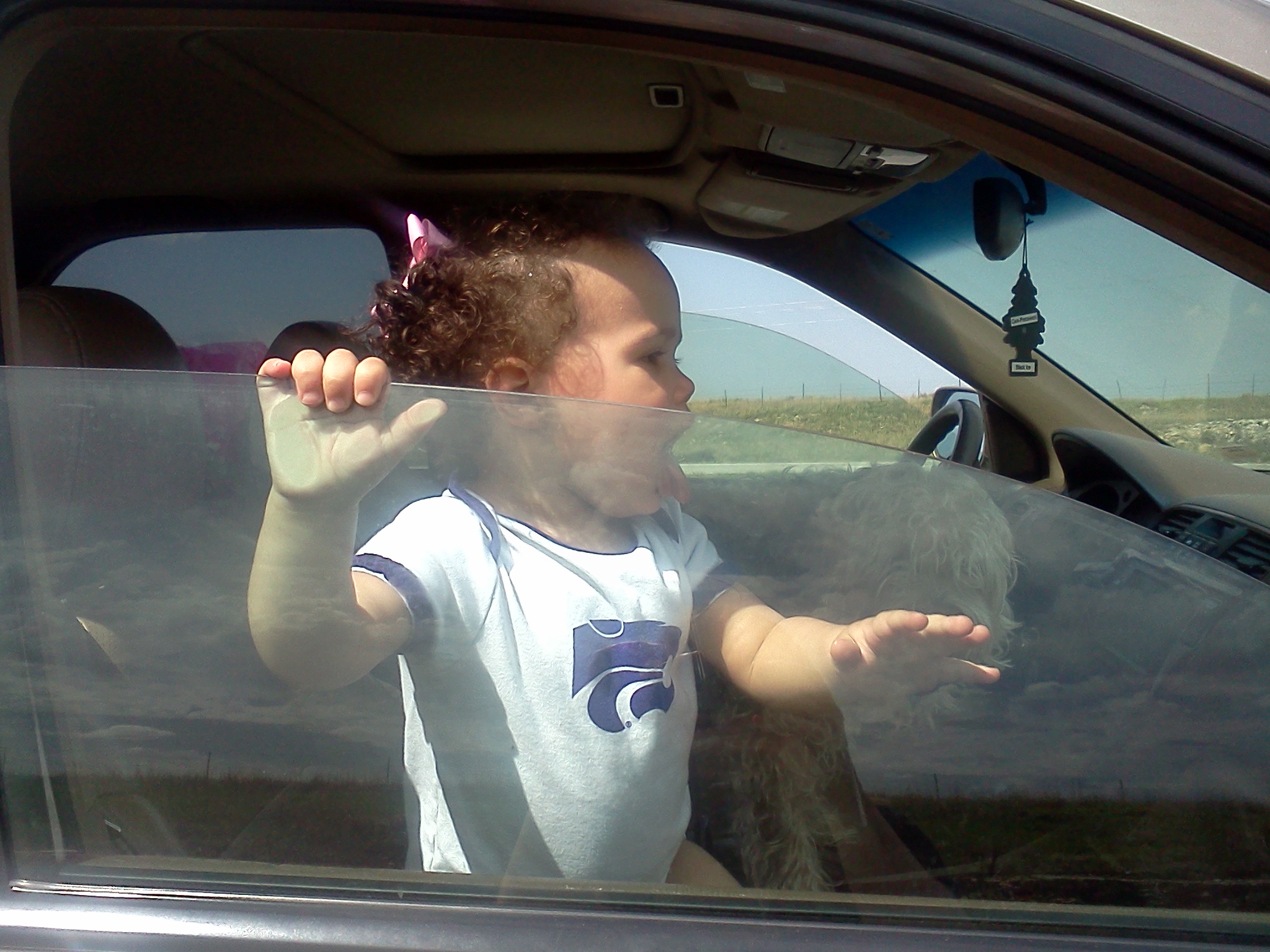
My toddler loved the opportunity to play around in the front seat as we waited for their return.  She bounced around smiling, turning the stereo up and down dancing, and pretending to steer the wheel.  Luckily the weather was perfect to have the windows down and feel a cool breeze.  I made a conscious effort not to look at the time, as I knew it would make the minutes cooped up in the car on the interstate progress in slow motion.

Her entertainment distracted me from two other vehicles who separately pulled up behind us to check on our wellness.  I was surprised each time to see a friendly smile appear at the window asking if we were okay.  Living in the mid-west where it is not out of the ordinary for people to go out of their way to help each other, it still seemed extraordinary that we would have so many generous offers for help.  I believe the larger of my protective guard dogs sensed the sincerity in their offers since he did not bark at the strangers.  In fact, the only noise he made was growling at the curious herd of cows coming to the fence to inspect our situation.

During the time my husband was away, a third car pulled up making that four individuals stopping all together.  This time it was a highway patrol officer and after hearing our situation put his lights on behind us and stayed until their return.  The officer eventually assisted us in calling a tow-truck as we discovered there was no way to unlock the tire and put on the spare.  Despite being irritated from our derailed trip home, my husband and I enjoyed the conversations with the tow-truck driver and highway patrol man as they brought us into town.  The Manhattan Wreckers driver and I discussed my afternoon on the highway and the unexpected offers of help I received.  He recalled his experience with the tornado that came through town three years ago and how members of the community chipped in to ensure everyone was taken care of.  

My poor dogs were stressed enough from the days events and finally we were at the brink of getting new tires and ready to head home.  Another saving grace to the day happened to be friends in town who picked up our pets to give them a break from being in the car and some time to play in a backyard.  We are forever, and repeatedly indebted to the Schottlers, for everything they do for us!

Eventually we made it home tired and safe, adding about 7 hours to what we anticipated it would take for our ride home.  The car had a full set of new tires and drove smooth again.

Exactly nine days later, in our other vehicle, I was again on I-70 when I felt the same feeling of the tire deflating.  “CRAP – How could this happen again?” I thought as I pulled to the side of the interstate.  Determined to be an independent woman and put the spare on all by lonesome, my aspirations were squashed when I couldn’t event figure out how to get the jack to loosen from the side compartment in the trunk.  

Midwest generosity to the rescue again…  A friendly stranger happened to stop behind me to check his own equipment at first and when he realized I was in need of help set aside his own priorities to make sure I was taken care of.  While initially I asked for help loosening the jack, he insisted on completing the whole job.  While he cranked the car up he told me about the grinder he had just purchased and the inventions he had made and sold.  I got a lesson in recycling carpet for plastics and oil, more importantly I received a lesson in going out of my way for others in need.

While I may not be of much assistance pulling over to help someone with a flat tire, there has to be more ways I can pay it forward in order to repay the individuals who have helped me.  These two incidences of flat tires in such a short period of time initially had me irritated and wondering why I had such negative karma being delivered to me.  After the bitterness settled, these situations reinforced my faith in the people living in the community around me.  It is nice to know I’m not all alone when I need help.  Despite the craziness of the world there are good people who do good things with no expectations of a return on their investment.